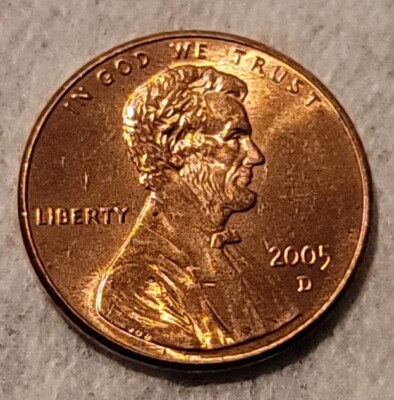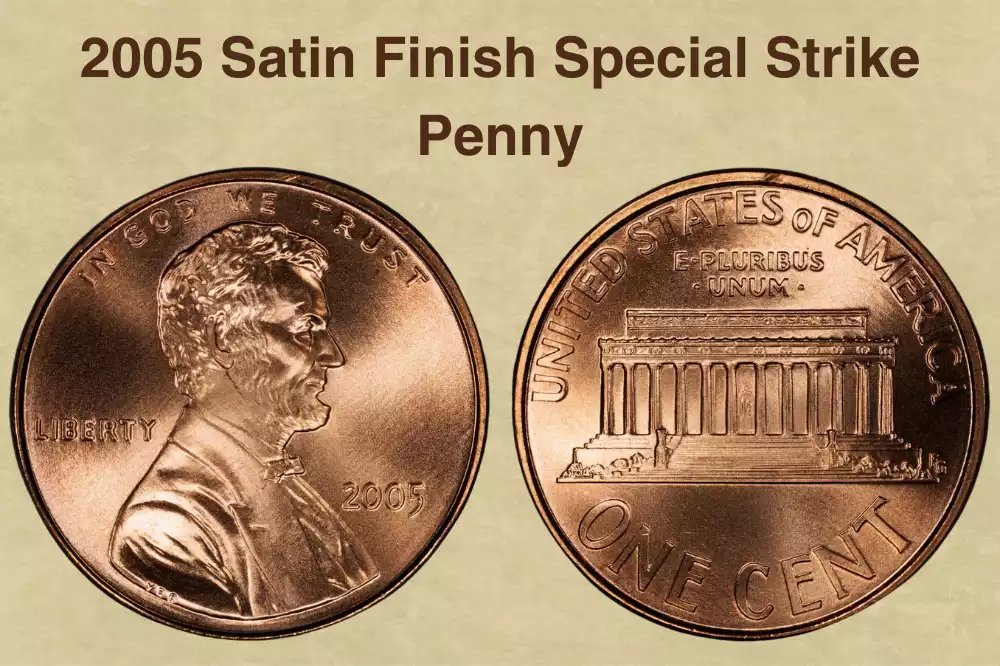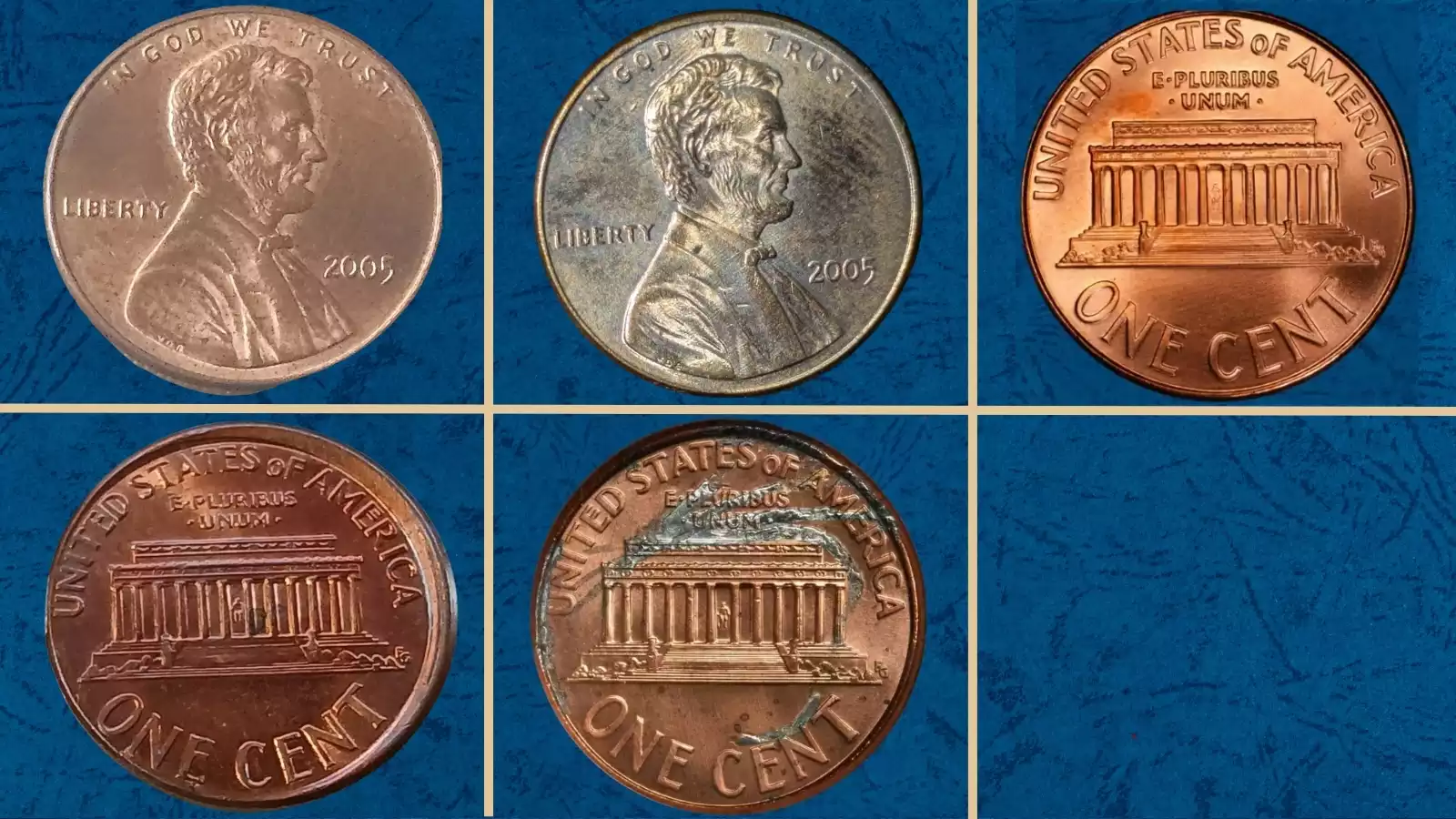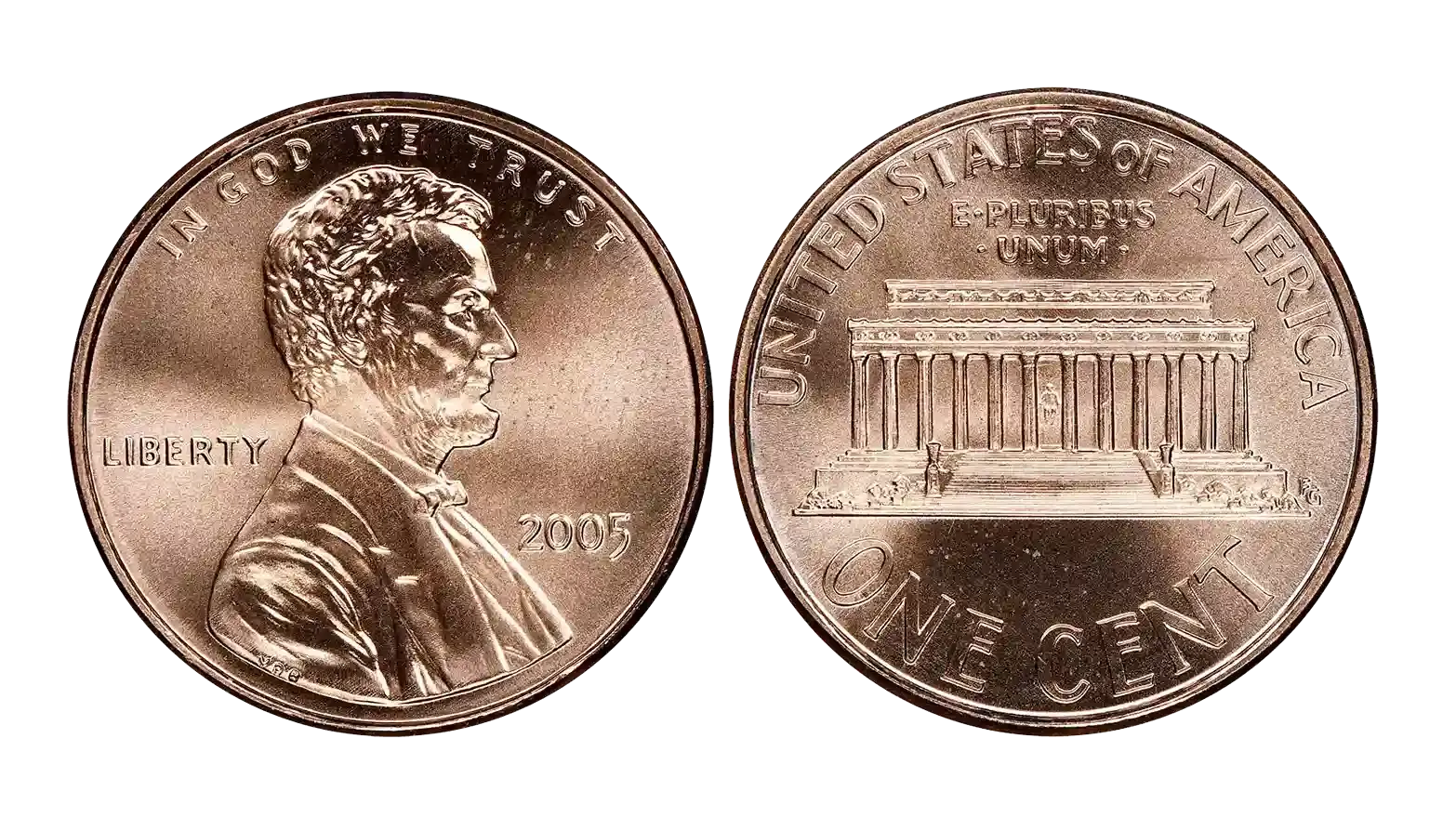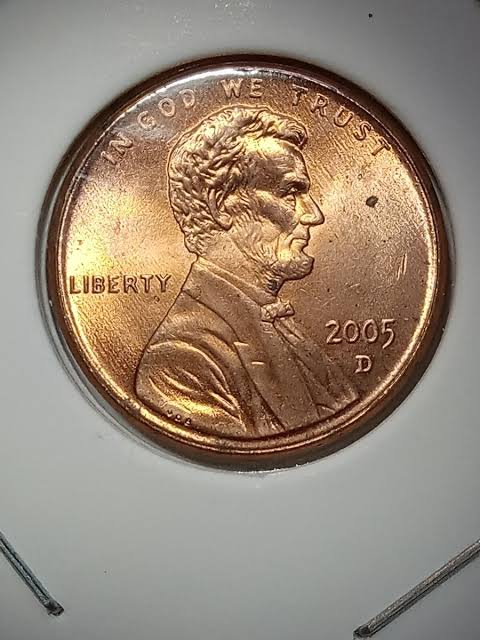
A 2005-D Satin Finish penny graded SP70 RD sold for $7,906 at auction — yet most 2005 pennies from pocket change are worth just one cent. The difference lies in mint mark, condition, surface designation, and knowing which errors to hunt. This free guide walks you through every variety, every error, and exactly what your coin is worth today.
★★★★★ Trusted by 12,400+ collectors · Based on PCGS auction data · 2026 edition
Check My 2005 Penny Value →Select your mint mark, condition, and any known errors to get an instant estimate.
If you're not yet sure about your coin's mint mark or condition, there's a free 2005 Penny Coin Value Checker online tool that walks you through identifying those details from your coin's photos before you use the calculator above.
Type a description of what you see on your coin and our analyzer will identify likely varieties and give a more tailored value range.
The Satin Finish Lincoln cent is the most valuable regular 2005 variety. Use this checker to determine if your coin is a genuine Satin Finish specimen — worth significantly more than a standard business strike.
For a thorough step-by-step breakdown of every variety and condition, consult this in-depth 2005 penny identification and reference guide that covers the full spectrum from worn to gem-quality specimens. The table below summarizes current market values across all major varieties.
| Variety | Worn / Circulated | Uncirculated (MS60–65) | Gem (MS67–68+) | Proof / SP Grade |
|---|---|---|---|---|
| 2005-P (No Mint Mark) | Face value | $0.80 – $4.10 | $20 – $1,950 | — |
| 2005-D (Denver) | Face value | $0.80 – $4.10 | $20 – $1,403 | — |
| 2005-S Proof (DCAM) | — | — | — | $4 – $891+ |
| 2005-P Satin Finish ⭐ | — | — | — | $15 – $2,760+ |
| 2005-D Satin Finish 🏆 | — | — | — | $15 – $7,906+ |
| Error Coins (any mint) | $20 – $80 | $50 – $300 | $300 – $1,200+ | Varies |
⭐ = Signature variety (most searched) · 🏆 = Record holder · Values based on PCGS auction data and recent market sales. Individual coins may vary.
📱 CoinKnow lets you snap a photo of your 2005 penny and instantly estimate its grade and variety — a fast way to cross-check these chart values before you buy or sell — a coin identifier and value app.
Jump to any section:
Several error varieties from the 2005 Lincoln cent series command serious premiums. The Mint's heavy focus on producing Satin Finish coins for collector sets led to rushed quality control on regular business strikes — creating ideal conditions for errors to slip through. Below are the five most significant varieties to know, with everything you need to spot them.
A flip-over double strike is one of the most dramatic and collectible errors in the Lincoln cent series. It occurs when a struck planchet is not ejected from the press and instead flips completely — landing upside-down — before receiving a second blow from the dies. The result is two overlapping impressions of the coin's design on a single planchet, often at a dramatically different rotation.
On 2005-D examples, you'll see two distinct renderings of Lincoln's portrait and/or the Memorial reverse at opposing angles. The coin may appear thinner than normal in areas where metal was displaced by the double impact. The rim and devices from both strikes are often clearly legible under magnification, making authentication by a 10× loupe straightforward.
Collector demand for dramatic flip-over double strikes is exceptionally strong. Value depends on the degree of separation between the two strikes — the more distinct and separated the ghost image, the higher the premium. Gem-quality examples in MS65 or better regularly bring over $1,000 at specialist auction houses. These errors are genuine production escapes, not post-mint alterations, so third-party grading is strongly recommended for authentication.
Doubled die errors on Lincoln cents are among the most eagerly hunted varieties in American numismatics. On 2005 pennies, the doubled die obverse (DDO) results from the working hub impressing the die at a slightly different angle on multiple hubbing passes during die manufacture. This bakes doubling directly into the die, which then replicates identically onto every coin struck with that die.
On 2005 examples, collectors focus their loupe on the word LIBERTY, the date numerals (2005), and the motto IN GOD WE TRUST. Strong doubling appears as a distinct second set of letters slightly offset from the primary impression — not a halo or smear, but a sharply defined secondary image. Reverse doubling (DDR) can also appear, especially in the Lincoln Memorial columns and lettering on the reverse.
While 2005 does not have a major CONECA-listed DDO comparable to the 1955 or 1972 cents, minor doubled die varieties have been documented and confirmed by specialists. Coins showing the strongest, most dramatic doubling in a high Mint State grade command the largest premiums. Subtle mechanical doubling, which is a post-striking die bounce effect, is much more common and worth little; only hub-type doubling carries meaningful collector value.
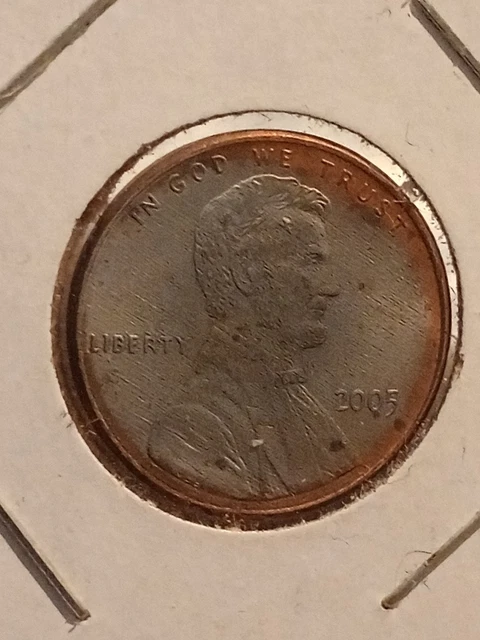
Since 1982, the Lincoln cent has been struck on a zinc core with a thin copper electroplated surface layer, giving it the familiar copper-orange appearance. A missing plating error — also called a missing clad layer in some literature — occurs when the copper plating is partially or entirely absent at the time of striking. The coin exits the press with an unplated zinc surface that appears distinctly silver-gray, immediately distinguishable from a normal penny's copper tone.
On 2005-P missing plating examples, the affected area will show a lighter, silvery color with a slightly rough or grainy texture compared to the smooth, warm-toned copper surface of a properly plated coin. Partial missing plating errors show a patchy appearance where copper is present in some areas and absent in others. Complete missing plating errors — where the entire planchet surface is bare zinc — are rarer and more desirable.
This error must be distinguished from post-mint stripping or chemical alteration, which can mimic the appearance but typically shows irregular edge damage or pitting. A genuine missing plating error will show consistent die detail and no surface damage. Heritage Auctions documented a 2005-P missing plating example selling in the $50–$80 range in 2020, while gem examples in MS65 or better with complete plating absence have exceeded several hundred dollars at specialist sales.
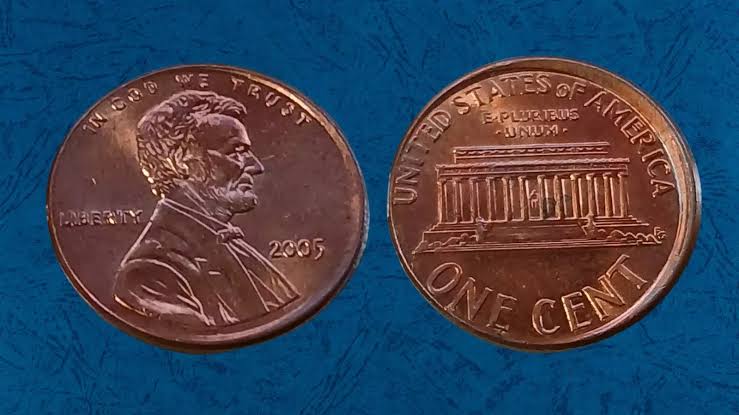
Broad strike errors occur when a planchet is struck outside the retaining collar — the ring-shaped metal guide that holds the coin during striking and forms the coin's edge. Without collar containment, metal spreads freely outward, producing a coin that is noticeably wider than the standard 19mm diameter with a flat, spread rim rather than a defined raised edge. Off-center strikes, a related error, occur when the planchet is off-center relative to the die, causing part of the design to be missing while the opposite side extends beyond the normal boundary.
On 2005 pennies, a broad strike produces a larger-diameter coin with Lincoln's portrait and all inscriptions present but spread across a broader surface. An off-center strike shows a crescent of blank planchet metal where the design should be; the percentage of off-center determines value — strikes 50% or more off-center with the date visible are the most desirable. Both types will show a missing or incomplete rim in the affected areas.
These errors are among the most accessible for entry-level error collectors because they are visually dramatic and easy to identify without specialized equipment. Value depends on the degree of the error: a modest 10% off-center or slight broadstrike brings $20–$40, while dramatic 50%+ off-center examples showing a date can reach $100–$150 or more. The date visibility is critical — an off-center coin where the year is readable commands a strong premium.
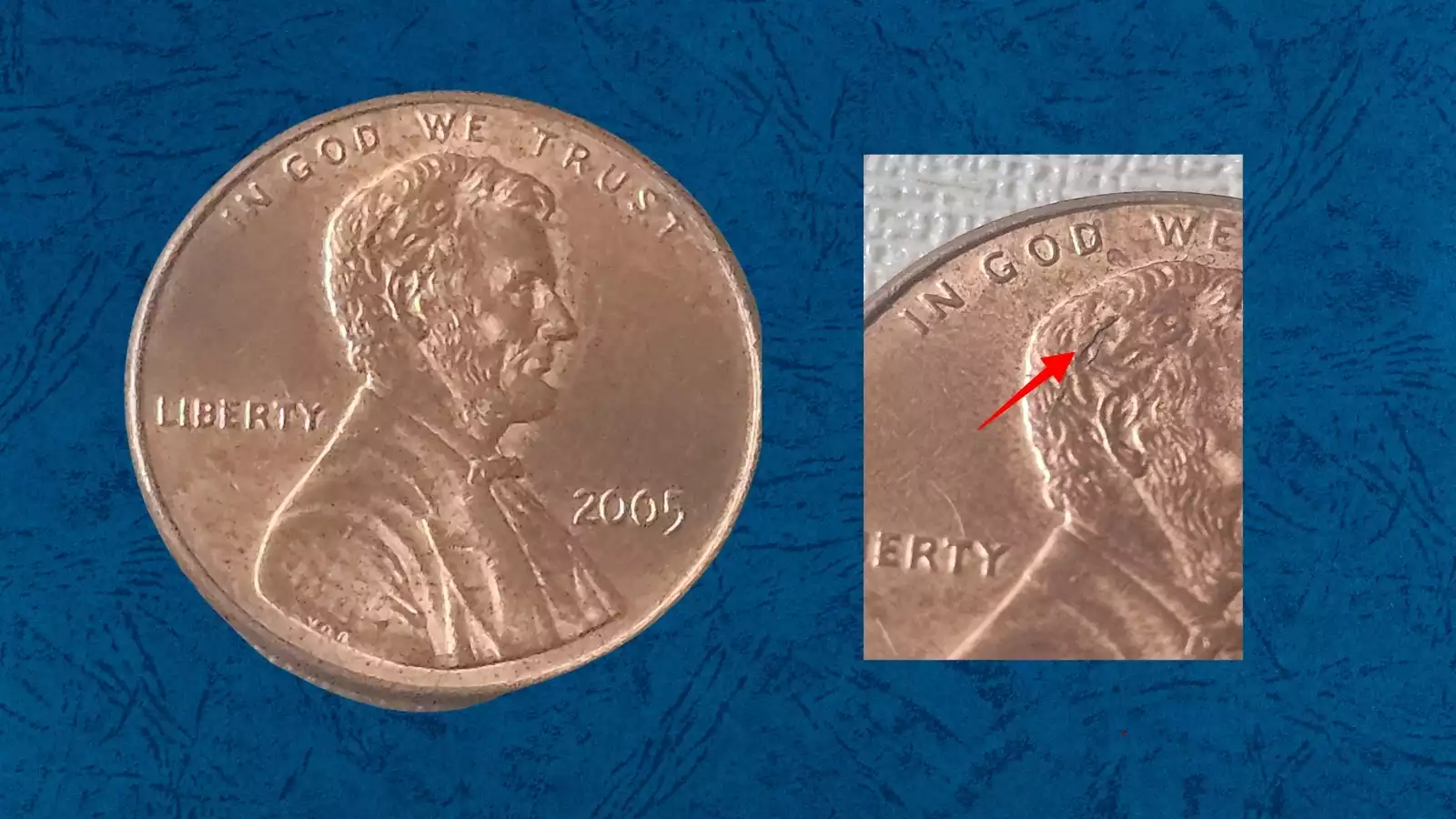
Die cracks are raised lines of metal that appear on coin surfaces as a direct result of the working die developing a fracture during production. When a die cracks, metal flows into the crack with each strike, leaving a raised, irregular ridge on every coin produced by that die from that point forward. Die cuds are an advanced form of die failure where a piece of the die breaks away entirely, leaving a raised featureless blob of metal — usually near the rim — on affected coins.
On 2005 Lincoln cents, die cracks most frequently appear across Lincoln's portrait, through the date, or across the Memorial building on the reverse. Diagnostic die crack examples can sometimes be traced to a specific die pair, making them a hidden specialist variety. A BIE error — a die break that produces a raised letter-like mark between the B and E of LIBERTY — is a well-known specific type of die crack on Lincoln cents and has been documented on 2005-dated coins.
While individual die crack coins are among the more modestly priced 2005 errors, dramatic die cuds near the rim or coins showing extensive die crack coverage command meaningful premiums. BIE errors specifically have a dedicated collector following and typically sell in the $5–$20 range, while large, dramatic cuds with significant metal displacement can reach $50–$100 or more. These are often overlooked by casual sellers, making them a genuine "best kept secret" for patient hunters at coin shows and estate sales.
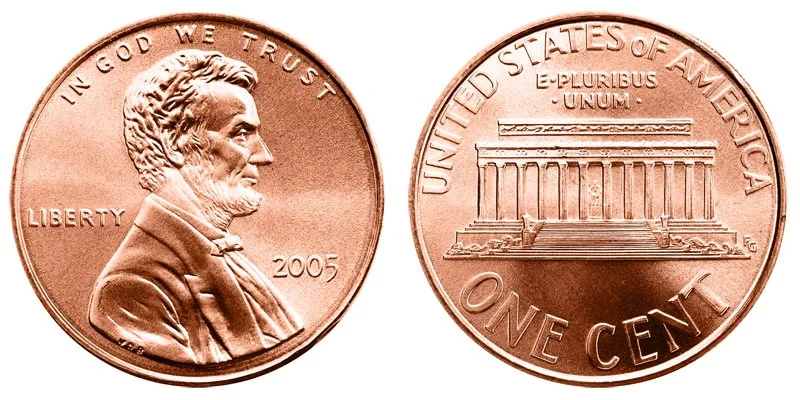
Use the calculator above to get an estimated value range based on your coin's mint mark, condition, and specific error type. It takes less than 30 seconds.
Get My Coin's Value →Understanding how many coins were struck — and how many survive in collectible condition — is essential to evaluating any 2005 penny.
| Issue | Mint | Mintage | Est. Surviving | Notes |
|---|---|---|---|---|
| 2005 (No Mint Mark) | Philadelphia | 3,935,600,000 | ~1.97 billion | Business strike; MS68+ extremely scarce |
| 2005-D | Denver | 3,764,450,500 | ~1.88 billion | Business strike; MS68 PCGS record $1,403 |
| 2005-S Proof (DCAM) | San Francisco | 3,344,679 | ~3.1 million | Deep Cameo proof; sold in proof sets only |
| 2005-P Satin Finish (SP) | Philadelphia | 1,160,000 | Unknown | Special Strike; Mint Set only; SP70: $2,760 |
| 2005-D Satin Finish (SP) | Denver | 1,160,000 | Unknown | Special Strike; Mint Set only; SP70: $7,906 |
| Total All Issues | — | ~7,865,554,179 | — | Nearly all are circulated business strikes |
Note: PCGS CoinFacts indicates that fewer than a dozen 2005-P or 2005-D business strikes have been certified at MS68 RD by any major grading service, making them genuinely scarce despite the billions-level mintage.
Condition is the single biggest driver of value above face value. Here's what each grade tier looks like on a 2005 Lincoln cent.
Heavy wear flattens Lincoln's cheek, jaw, and hair detail. The Memorial columns on the reverse may be faint. Virtually all circulated 2005 pennies in this range are worth exactly one cent.
Moderate to light wear on high points. Lincoln's ear and hair show softness but remain distinct. The Memorial reverse retains all columns. Still worth essentially face value for most collectors.
No wear anywhere, but contact marks may be present from bag handling. Full mint luster is key. Color matters: Red (RD) coins command the highest prices. MS65 RD examples bring around $4–$18 in current markets.
Near-flawless surfaces with virtually no contact marks. Full vibrant Red color. MS67 is very scarce; MS68 RD examples are genuinely rare with fewer than a dozen certified. The MS68+ RD record sale reached $1,950.
For 2005 Lincoln cents, color designation (Red, Red-Brown, or Brown) is applied by PCGS and NGC at the time of grading. A coin retaining 95% or more of its original copper-red luster receives the RD designation, commanding the highest premium. Because the 2005 cent is copper-plated zinc, environmental exposure causes copper to tone quickly — finding a Gem MS67 or MS68 RD example that hasn't oxidized is genuinely challenging and explains why such coins command strong auction prices.
🔍 CoinKnow can help you match your coin's surfaces against graded reference examples to estimate where yours might fall on the scale — a coin identifier and value app.
The right venue depends on your coin's grade and what you're trying to achieve — maximum price, fastest sale, or least hassle.
The ideal venue for high-grade 2005 Satin Finish pennies (SP68+), confirmed MS68+ business strikes, and dramatic error coins. Heritage reaches a global specialist audience and achieves top-of-market prices for exceptional specimens. Minimum consignment values apply — best suited for coins worth $200 or more. Expect a seller's commission of approximately 10–15%.
For mid-range 2005 pennies — errors in the $20–$150 range, raw uncirculated coins, or Satin Finish examples in SP65–SP67 — eBay offers the largest buyer pool. Check recently sold 2005 Lincoln penny prices and completed eBay listings to set a competitive asking price before listing. Use "Sold Listings" filter to see actual sales, not just asking prices.
Convenient for quick, hassle-free sales but expect to receive wholesale (below retail) prices. Local dealers are best for lots or collections rather than individual valuable specimens. Bring comparable sales data — from Heritage or eBay — to negotiate a fair offer. Most shops will pass on common circulated examples but may pay fair prices for graded or confirmed error coins.
The Reddit coin marketplace is surprisingly active for modern error coins and specialty items. Transaction fees are minimal (just PayPal fees) and the community is knowledgeable. Ideal for coins in the $30–$200 range where eBay fees would meaningfully eat into your profit. Post clear, detailed photographs and include any grading service information.
For any 2005 penny you believe grades MS67 or higher, qualifies as a genuine Satin Finish (SP68+), or contains a confirmed dramatic error worth $100 or more, professional grading by PCGS or NGC is strongly recommended before selling. A certified grade and authentication seal dramatically increases buyer confidence and typically results in a 2–4× higher sale price compared to selling the same coin raw (ungraded). PCGS and NGC economy submissions typically cost $20–$30 per coin.
Our free calculator takes 30 seconds. Select your mint mark, grade, and any errors — get an instant value estimate.
Calculate My 2005 Penny Value →